Reviews
Cooperative Pathfinders: Logic Escape offers a refreshing take on the puzzle genre by requiring players to think for two characters at once. The environmental puzzles are well-crafted, gradually increasing in complexity without ever feeling unfair. The optional item collection adds replay value for completionists. Its clean visual design and responsive controls make it easy to pick up, while the later levels provide a satisfying challenge for seasoned puzzle fans. A solid choice for anyone who enjoys logic games with a cooperative twist.
About this game
Core Cooperation Mechanics
At the heart of this experience lies a simple but demanding requirement: players must manage two characters at once. Each character possesses a unique ability that the other lacks, forcing the player to switch between them to solve each room. One might move heavy boxes, while the other can squeeze through narrow passages. The challenge is not just in solving individual puzzles, but in orchestrating the pair so they meet at the exit together. This dual-control system creates a satisfying mental workout that rewards planning over speed.
Environmental Puzzle Design
Each room presents a self-contained puzzle built around physical obstacles and moving threats. Players encounter stacks of crates that must be rearranged to create pathways, ladders that connect different vertical levels, and security cameras that sweep across the area. The puzzles are designed to require both characters to act in sequence, such as one holding a switch while the other dashes through a timed door. The environment itself is the puzzle, with no abstract riddles or inventory management to distract from the spatial logic.
Progression Through Complexity
The game introduces its mechanics gradually, starting with simple rooms that teach the basics of character switching and obstacle interaction. As players advance, new elements are added at a steady pace. Later rooms combine multiple obstacle types and require longer sequences of coordinated actions. The difficulty curve feels natural, giving players time to master each new concept before layering on the next. This approach keeps the experience accessible to newcomers while still offering a genuine challenge for puzzle enthusiasts.
Item Collection as Optional Depth
Scattered throughout each room are small collectible items that are not required to complete the level. These items are often placed in locations that require extra effort or a more creative route to reach. Choosing to gather them adds an optional layer of difficulty, as players must deviate from the most direct path while still ensuring both characters reach the exit. This system rewards thorough exploration and careful planning without punishing players who prefer a straightforward approach.
Visual Clarity and Control Feedback
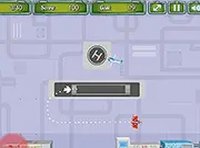
The game uses a clean, top-down perspective that makes each room's layout easy to read at a glance. Characters are clearly distinguishable, and interactive objects are highlighted with subtle visual cues. Controls are mapped to separate keyboard keys for each character, and the game provides clear on-screen prompts. This straightforward interface ensures that the player's focus remains on the puzzle logic rather than fighting with the controls.
Compatibility
Play on Any Device | Chrome / Safari / Edge Recommended









Comments
0 comments