Reviews
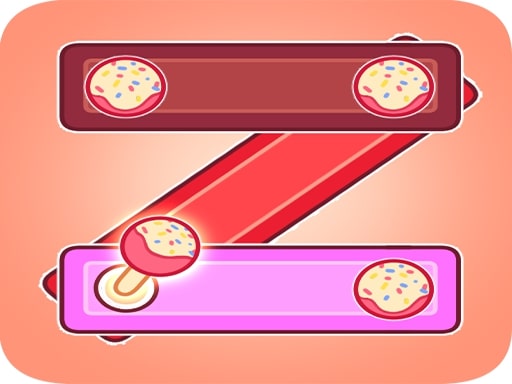
Logic Puzzle Drop Challenge trades speed for sequencing. The core loop is straightforward: remove pins so chocolate pieces land correctly, and the difficulty comes from layouts where one pin supports several pieces at once. Obstacles, rotating platforms, and limited moves appear as you progress, which keeps later levels from feeling like repeats. It suits players who enjoy planning a full solution before acting, and it is less suited to anyone wanting fast, reactive play.
About this game
What You Actually Do
Every level shows chocolate pieces resting on pins. Clicking or tapping a pin removes it, and the piece it was holding falls. The catch is that removal order determines where pieces land. Pull the wrong pin first and a piece can jam against another or drop outside its target zone. There is no timer forcing quick decisions, so the real work happens before you click anything.
How Difficulty Grows
Early layouts use a handful of pins and obvious sequences, which makes them useful for learning how gravity and pin placement interact. Later stages introduce obstacles and moving parts, so a pin that looks safe to remove may shift a platform that another piece depends on. Some levels also limit the number of moves, turning each removal into a commitment rather than a free experiment.
Reading a Layout Before You Move
Study which pieces sit directly above their target spots and which pins support more than one piece. Pins holding a single piece are usually safer to remove early; pins propping up a shared structure often need to stay until the pieces above them have cleared. When a level stalls, reversing your assumed order frequently reveals the intended sequence.
Who This Suits
The controls are simple enough for young players, while the later puzzles reward the kind of planning that experienced logic-game fans expect. Sessions are short, the game runs in any modern browser, and nothing needs to be installed. It fits players who prefer calm, deliberate problem-solving over reflex-based challenges.
Compatibility
• OS: Windows 10+, macOS 11+, iOS 14+, Android 10+
• Browsers: Chrome 100+, Safari 15+, Edge 100+, Firefox 100+
• Not compatible with Internet Explorer
Tested on real devices ✅ works as expected













Comments
0 comments